The Death of the Paper Punch Card: Why Smart Businesses Use Smartphone Wallets
From coffee shops to beauty salons and auto garages, paper loyalty cards are being replaced by native Apple and Google Wallet passes. Here is why customers love them.
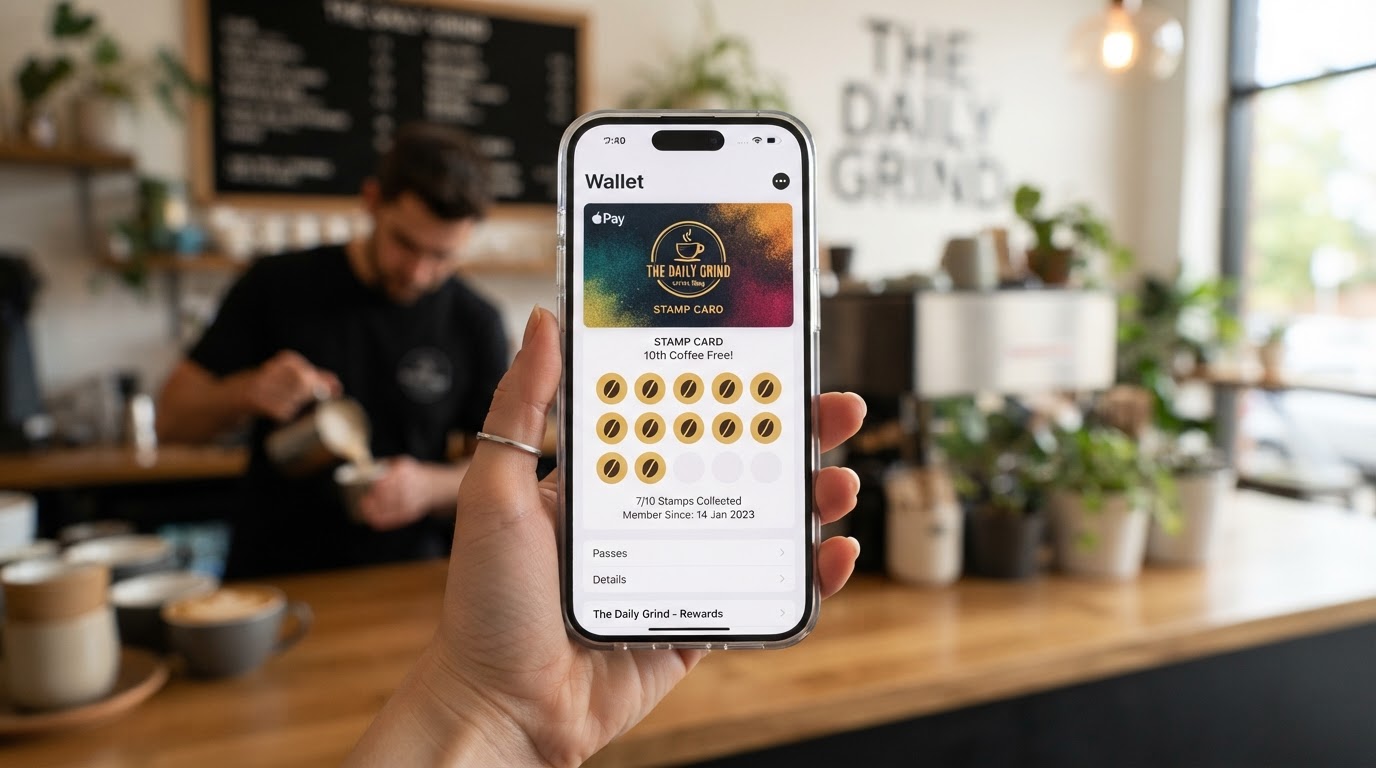
- 90% of smartphone users carry Apple Wallet or Google Wallet daily.
- Digital loyalty passes can send push notifications without needing an expensive custom mobile app.
- Geo-location triggers remind customers of your business whenever they walk or drive nearby.
- You gain full visibility into customer visit frequency, lifetime value, and inactive periods.
For decades, the standard way a local business encouraged repeat visits was simple: a cardboard loyalty card stamped with ink. But ask yourself: how many half-stamped loyalty cards are currently sitting in your kitchen drawer or lost in an old coat pocket?
Paper loyalty has four fatal flaws:
1. Friction: Customers forget to carry the card, lose it, or don't want extra wallet clutter.
2. Zero Data: You have no idea who holds a card, how often they visit, or when they stop coming.
3. One-Way Communication: A paper card cannot alert a customer when you have a quiet Tuesday or a seasonal promotion.
4. Fraud & Loss: Cards can easily be stamped without a purchase or duplicated.
Digital loyalty solutions use the native Apple Wallet and Google Wallet technology already built into every smartphone. Customers add your pass with a simple QR code scan — no App Store download required.
Once saved, you can send targeted lock-screen notifications, update points automatically at checkout, trigger reminders when they enter your postcode, and automatically send a 'We miss you' perk if they haven't visited in six weeks. It's high-tech customer retention at a fraction of traditional advertising costs.
Modernise Your Customer Retention
Deploy a digital loyalty pass for your business in Apple and Google Wallet.
Your Business Doesn't Need More Complicated Technology. It Needs Better Systems.
Tell us where your business is today, where you want it to go and what is currently getting in the way. We'll help identify the systems that could make the biggest difference.